Tuesday, May 01, 2018

Home Salone


After a week at the AirBnb, I moved out and found an incredibly cheap guesthouse. This was probably one of the dirtiest holes I have ever stayed in, windows were missing, the shared bathroom was beyond filthy, but the owner was friendly and paying just a third of the next cheapest accommodation I could find, I couldn’t really complain. Since last writing, I have mostly just been hanging out, celebrating Sierra Leone’s Independence Day, visiting nearby postcard perfect beaches and enjoying what is quickly becoming one of my favourite cities. Then one night I had a minor setback, coming home on a motorcycle taxi, the driver suddenly turned off the main road and took me into some dodgy neighbourhood, he brought out a knife and told me to give him everything. And everything is pretty much what he got, my phone, the cash I had on me including my secret stash inside a toilet roll, the toilet roll and then worst of all he told me to take off my Havaianas. I pleaded to at least spare my trusty flipflops but he was having none of it, and left me standing there barefoot with no way to get home. I started walking the long walk back, but when I was back on the big road, a taxi driver took pity on my sorry appearance and after hearing what had happened he drove me home, free of charge.
This hasn’t really tainted my view of Freetown, I still love it, but it did mean I stayed a bit longer than planned, buying a new phone and finally settling for a pair of cheap slippers, although they are nowhere near the standards of the Brazilian brand. Another setback was that my visa application for Ghana was denied, I still have a few countries to get through before I reach there, so hopefully I can resolve that issue at another embassy in the future. My visa for Liberia however was granted and it is time for me to leave Freetown after spending more than a fortnight here. Tomorrow morning I will make my way east, hopefully stopping off at some more beaches, national parks and towns in beautiful “Salone.”

Wednesday, April 25, 2018

No Such Thing As A Free Town


In Outamba-Kilimi they had some very basic accommodation in thatched huts with no electricity or water, but it was perfect for unwinding. I was the only person staying in the National Park and I spent my time kayaking to see the hippos, walking around in search of troops of monkeys or simply relaxing and swimming in the river. After a couple of nights I got bored of my own company though, and through a mixture of vehicles I could reach the Sierra Leonean capital of Freetown. This location was once a major port for slave trade, but later when the British abolished slavery it became a settlement for freed slaves, hence the name Freetown.
It’s funny how you can straight away get a good or a bad vibe about a place, but as soon as I stepped out of the cramped minibus I loved it. It was dirty, hot and chaotic, motorcycles, cars and tricycles whizzing in every direction but it was great and people were really friendly right from the start, helping this bewildered white man. I made my way to the local YMCA, and though it was clean and nice it wasn’t quite as much fun as The Village People had made it out to be plus it was a little bit pricey, so I decided to check out after two nights. Knowing that I would want to stay in this city for a while I managed to get quite a good deal through AirBnb, and rented a room for a week. One reason I needed to stay, was to once more arrange visas for onward travel, but really I just loved everything about the place. The crazy mix of archictecture, old colonial buildings stand side by side with modern ugly structures and adorable two or three story ramshackle cottages, a colourful patchwork of brick, wooden planks and corrugated tin, some houses seem to be defying gravity just by staying upright.
Then you have the location, based on series of lush green hills overlooking the ocean and it’sbeaches, even Lumley Beach which is located in the city is surprisingly clean and empty and if you venture just a few kilometres outside of town you have beautiful stretches of sand all to yourself. Most of all though my favourite feature is probably the people, Freetownians are very kind and helpful, also they don’t mind a drink which is always a positive in my book.
One day I visited the Tacugama Chimpanzee Sanctuary, located just outside of the city, on one of the many hills, it is amazing how tranquil andquiet it is. I went on a tour and was just as fascinated by our closest relatives as all my previous encounters with them, they are just such wonderful creatures and this sanctuary does a great job rescuing them from deforestation and more shockingly the bush-meat trade. I have now been in Freetown for more than a week and will probably stay to get one more weekend before heading to new destinations.

Wednesday, April 18, 2018

Guinea A Break!


After my time in the capital I decided to move to a more quiet location, and got a seat in a “neuf-place.” After many sweaty hours we arrived in Mamou where I experienced the first rain since Morocco. As I got out of the car, it was pouring down and my small backpack which contains all my electronics was getting drenched, so I grabbed it and rushed across the road to find some shelter. I didn’t look both ways, and just as I turned my head a motorcycle was coming at full speed down the wrong lane. The driver managed to slam his brakes and swerve, but still came crashing right in to me at high speed, knocking me out of my flip-flops to the ground, my backpack flying in front of me. People rushed to my help, but I got up with just a few tiny scratches and a slight pain in my hip where the bike had hit me. I was more concerned where my Havaianas had ended up, but someone soon located them. The driver was slightly worse off, as he had gone skidding for some distance, but he was fine and his motorbike albeit scratched still worked. I felt quite bad, because I feel I was more in the wrong for not looking properly, but we both apologised, and people were saying how miraculous it was that we had got off so lightly and that god was watching over us. Then I had to find another car, squeeze my aching body into it, before getting to Dalaba where I reluctantly had to get on a motorcycle taxi to get to my guesthouse.
Dalaba was a really small and peaceful town in the Guinean highlands, I spent a few nights here walking around the lush, green mountains, visiting the nearby Ditinn waterfall before heading further north to the town of Pita. This was only a slightly larger town, but still very quiet, and I did more of the same exploring. One day I got a motorcycle driver called Alpha Ousman to drive me around, first visiting another stunning set of waterfalls, called Kambadaga, where we were the only visitors. It’s strange to think, how these magnificent natural wonders are empty of tourists, foreign or local, as an example Alpha Ousman has lived his entire 23 year old life in Pita, yet never before visited these waterfalls located only 20 kilometres from his home, and he works as a driver!
After this we drove towards Kinkon falls, but the military had set up a roadblock and after viewing my documents they wanted a fee for us to visit. It was only the equivalent of $3, but they wouldn’t give me a ticket or receipt, and I refused to lace these corrupt official pockets with any more money so we simply turned around without seeing these falls. This was the last drop I needed from Guinea, so the following morning I got up early and decided to head for the border with Sierra Leone. My transport dropped me off at a crossroads towards Medina Oula and at once I regretted my choice. There was not much here apart from a few motorcycle drivers, and realising their monopoly, they were quoting some rather high prices to get me to the border, where I knew I would once more be stuck in the same situation. I was kicking myself for always choosing these tiny borders, just because I hate going back on myself and it looks nicer as a route, because it rarely saves me any time or money. Then I saw a vehicle turn in on the small road, and I realised it had Sierra Leonean licence plates, so I picked my bags up and ran after it. The driver, Kandé, stopped and he was indeed from Sierra Leone, heading almost the whole way to where I wanted to go for the night.
Finally my luck seemed to be turning. The following drive was like a scene out of “Blood Diamond” as he raced his 4x4 with a cracked windshield, bouncing down the incredibly bumpy dirt track, until we got stuck, one of the wheels firmly lodged in a crevasse. After some time we managed to get loose, and made our way past some military checkpoints, where I noticed Kandé slipping the soldiers some bills, then passed the two border controls and made it to Fintonia in one piece. This was Kandé’s home village and he asked me for a minimal amount of money, which I was more than happy to give him, then he arranged for a motorcycle driver to take me to my final destination, Outamba-Kilimi National Park.

Tuesday, April 10, 2018

A Tale Of Two Guineas


In the morning ze Germans headed for the bus station while I went back to the Bissau harbour which I feel like I know pretty well by now. Once more I had to sit around for hours before my canoa finally filled up and left. This time my destination was Bolama, the first capital of Portuguese Guinea, which is a small island a few hours from the mainland. Most of the old Portuguese buildings have been abandoned and the village has built up further inland leaving a ghost town of ruins and crumbling colonial architecture. The feeling is made even eerier by the thousands and thousands of fruit bats that darken the sky, apparently they are a local delicacy but I was never offered any.
The day I arrived also happened to be my birthday, but as it was a Tuesday, on an island with a population of ten thousand people and none of them knew me I figured it would just be a quiet night, how wrong I turned out to be. As every former Portuguese colony I’ve been to, Guinea Bissau has a huge export of cashews, and on Bolama, cashew season had just started. Although I am allergic to the nut I can eat the fruit and more importantly I can drink the wine made from it, which was being sold at 200 CFA (roughly 35 US cents) a litre. I made some local friends, drank the night away and before I knew it we were at the islands discoteca. That night turned out to be a dance show, but not any dance show, the three stars were all cross dressing men with some serious talent. It really warmed my heart to see the entire village paying to see these performers as homosexuality is usually very taboo in Africa and often illegal, in some cases punishable by death, but here in Guinea Bissau it seemed to very accepted and made for a very memorable birthday. I stayed one more day and then crossed over to the mainland village of São João, where I could catch a series of pickup trucks, on very bumpy dirt roads getting whipped in the face by overhanging branches and then a minibus before I finally reached Saltinho.
Straight away before I had even checked in to my hotel I saw a familiar tent, and there were Stefan and Albert once more. Saltinho was a beautiful relaxed spot, next to a river with some small cascades, we had one final farewell night and the following morning I made for the border with Guinea.
The journey was a lot longer than it looked on the map, I first got a minibus, then sat on the back of a motorcycle for five hours, sorting out the usual immigration issues and a few military checkpoints before reaching Boké. Here I noticed that not only had the language and currency changed, also the “sept place” had turned into a “neuf place.” It was the same old beaten up French car, just now they squeezed in two extra people, making the next part of my journey very cramped. We got stuck at a river for about three hours, because although they have built a series of bridges to cross it, it can only take vehicles in one direction, creating a very long queue on both sides. After then getting a shared taxi, I finally arrived in the downtown area of the Guinean capital Conakry just before midnight, about 15 hours after setting off that morning. I found a cheap place to stay at the Catholic Mission, took a quick shower and then got some much needed sleep. The following day I was really welcomed to the city, I had just withdrawn some money and was doing my usual aimless wandering when I heard a voice shouting. I turned around to see a furious soldier and realised it was of course me he was shouting at.
He told me that the road was closed, I looked around and saw loads of other people walking on this so called closed road, but apologised for my mistake and turned to go back to the way I had come. He said no you have to come with me, and guided me to a military tent, here four other uniformed men were sitting and they told me to show them my documents. Luckily I thought, I had them all on me and showed them proudly. They saw my moneybelt and told me to show them the contents. There was the huge wad of cash I had just withdrawn, plus an envelope with US dollars. They told me I was a suspect of terrorism, because I had been walking towards the presidential palace. I explained in my poor French, that I was very sorry, but I had just arrived and didn’t know any better. Then they told me to empty my pockets, where I had a box containing one of my Swedish snus pouches. I explained it was just tobacco, and explained the Swedish writing, but the evil eyes of the soldier just lit up. He told me this was highly illegal and classed on the same level of narcotics as cocaine and now not only was I a potential terrorist but also a drug smuggler. They were going to have to call their bosses and the police to take me to prison, unless I would be willing to maybe part with some “small money.” Usually I would have called their bluff, but the fact that I had so much money on me, which would simply disappear if it was taken into custody combined with the fact that I didn’t want to miss the Manchester derby which would kick-off in a short while, made me consider my options. They hinted towards my moneybelt, and said $200 should do it. I put my head in my hands, and pretended to almost start crying, I explained this really wasn’t “small money” to me, which was hard considering they knew the contents of my pouch. After about 30 minutes of negotiating in broad daylight with people still passing by on the “closed street” I managed to get them down to 200 000 Guinean Francs (roughly $22) they handed me back my passport and snus and I rushed home, happy I had gotten off lightly but shaking with anger and adrenaline. I decided to not let this get me down, stashed most of my cash at home and went straight back out to watch a brilliant game of football. The first half was terrible, but in the second United pulled off an incredible comeback to beat City 3-2 with Paul Pogba in particularly amazing form, coincidentally or not he happens to be of Guinean descent. The next day I got a pirogue with my newfound friend Joseph, a very strong man who has lost the use of one leg due to Polio, to the beautiful island of Kassa just off the coast. We spent a day walking around the small village and beautiful beaches, just the relaxation I needed after the previous day's drama.
Then one day I visited an acrobatic centre where for free you can watch the incredible acrobats, dancers, drummers, jugglers and contortionists as they practice their routines. There really was so much going on I didn’t know where to look, but I spent almost four hours there mesmerised by their talents. Conakry as a city really isn’t picturesque at all, big, crowded and dirty, which although I’m sure may have it’s charm, will always be the place where I had to pay my first bribe, and after that first day I never felt really comfortable with the huge military presence, trying to avoid the men in camouflage at all costs.

Saturday, April 07, 2018

Bissau-y Bee


Say what you want about Portuguese colonisation, but they really had a knack for picking out stunning coastlines. Varela was a tiny village with not very much to do, but the beach was beautiful, very clean and completely empty of people. The Harmattan haze still haunted me slightly so I stayed for two nights, and then had to get up at 4 AM to catch the only minibus out of town. This took me over some dirt roads in terrible condition to Sao Domingos, close to the Senegalese border, so I decided to get a motorcycle to the immigration police and explain my issue. It was surprisingly easy to resolve, my short time as a fugitive was over and I could travel at ease to the capital of Bissau. I found a really crappy hotel in the old town, and wandered around the charming, crumbling colonial quarters that evening.
When I found out there was a boat leaving the following morning I decided to make my stay short and got up bright and early to secure my spot. I was told to be there at 8 AM to make the 9 o clock departure, but this kept being postponed and at 11:30 I was told that the trip was cancelled, another captain approached me and said he would have a boat leaving at 2 PM, so I changed my ticket and sat in the sun for another couple of hours. At half past two, this captain told me his boat wouldn’t be leaving either, there just weren’t enough passengers. They say the most important thing to bring when travelling in Africa is your patience, and although it’s a cliché, I couldn’t help but think how true this was, nobody else seemed angry that they had wasted their whole day in the scorching heat, so I decided to take it for what it was and enjoy the fact that I would have one more evening and night to explore Bissau.
The morning after, a massive group of people were waiting at the docks, all wanting to go to the island of Bubaque. Even if only ten percent of the population is Christian, Easter is still a big holiday here and for the whole weekend there would be a big festival on the island. I had opted for the local canoa seeing as the price of the ferry was more than quadruple the price for foreigners. These large wooden motorised canoes crammed in hundreds of people, all of their luggage plus the entire cast of Old MacDonald’s farm. It was a very uncomfortable ride, but the scenery of the Bijagos archipelago and calm waters made it all worth it. Bubaque town was very small and cute but I was concerned how I would find accommodation with the hordes of local tourists flooding to the island. I had no reason to be worried as within minutes I had been offered several options and at a very affordable price I chose a guesthouse close to the port. Later I bumped into Stefan and Albert, two German guys I had met in Varela, and for the next three days we enjoyed the Easter celebrations with the local crowd and a few other foreign tourists. There was a lot of drinking but the island also had some amazing beaches and we all had a great time.
On Easter Monday we knew that a lot of people would be leaving, and not wanting to get stuck on the island, we decided to get up before sunrise and get a ticket returning to Bissau. Once more our patience was put to the test, and after we saw the two large ferries leave, our canoa was still not moving. We were told that it wouldn’t leave until the next day, but now people were not as content and patient, as they had jobs to go back to and after a lot of loud arguing and protests we were moved to a smaller boat and could get back to the capital before sunset. We found a nice guesthouse, had some food and a couple of beers and got some sleep as we were heading in different directions early the next morning.


In footwear related news:
No trip is complete without a flip-flop incident and sadly I have to let you all know that my trusty companions were stolen one day in Bubaque whilst we were playing football on the beach. They have served me well since I had them custom made and designed in the Havainas shop in Bali more than two years and though it was heartbreaking to part with them, I can only hope they will serve someone in more need. However all is not lost, having learnt from my previous trips, I asked my brother to buy me a pair when he was in Thailand, so I had backup and now we will see how they hold up.

Wednesday, March 28, 2018

Man On The Run


Back in Kololi I made myself at home at Aisa’s guesthouse once more, went to my local bar and met up with Diego. Here we also met Claire, a Dutch girl and it was nice to hang out with tourists around my own age, quite the rarity in these parts. I had decided I would only stay two nights as I really had to keep moving because my future visas had already started to be valid. On our second night, we were barhopping when Claire realised her wallet was gone, we reacted quickly and went back to the previous bar where one guy had been particularly affectious. We found him, and then chaos ensued as a large group of people gathered around. One of the barmen appeared to be holding the purse under his shirt, but he didn’t want to hand it over until the police were at the scene, there was a lot of pushing and yelling and finally the police arrived, slapping the young thief, who claimed he had found the wallet, then dragging him into a bathroom for interrogation. It was clear he had stolen it, but I couldn’t help but feel for the kid, although part of me also felt he did deserve some punishment. Claire and Diego went to the police station, whilst I waited at a bar with Alpha, a young French guy who was living and working in The Gambia. Eventually the others returned and though it was late we decided we needed to keep the night going and have a good final night, which we did. When I woke up the following morning, I had decided to head towards the southern border with Senegal. There was a strange fog in the air, which I later found out to be The Harmattan Haze, not actually fog but a large sand cloud which the winds had brought from The Sahara, leaving the sky in a greyish brown mist of dust, blocking out the sun and creating a very dry heat. This weather phenomenon is common at this time of year, and covered large parts of West Africa for about a week. I got a series of different vehicles, sadly saying farewell to The Gambia and finally reaching the Senegalese town of Ziguinchor. This is the capital of The Casamance region, but it wasn’t a very nice town, very dirty and with the Harmattan sky it felt even duller, so after one night I decided to head towards the coast and got to Cap Skirring. Here I found a cheap guest house, but although it was a very nice beach it felt pointless spending time here without being able to see the sun, so after just two nights I kept on moving.
According to my guidebook and the online maps I could find I would have to go back to Ziguinchor for the border post at Sao Domingos, but it felt unnecessary seeing as I was very close to the Guinea Bissauan border. After consulting some people I found out it was possible to cross over just south, but it wasn’t going to be an easy journey. Concerned for my safety and the availability of local transport, my guesthouse arranged for one of their staff, Sili, to drive me on his motorcycle to Varela on the other side of the border. I am happy they did, as we saw almost nobody on the road, it was a tough drive and I had get off and walk large portions of it when the sand got too deep to maneuver the bike.
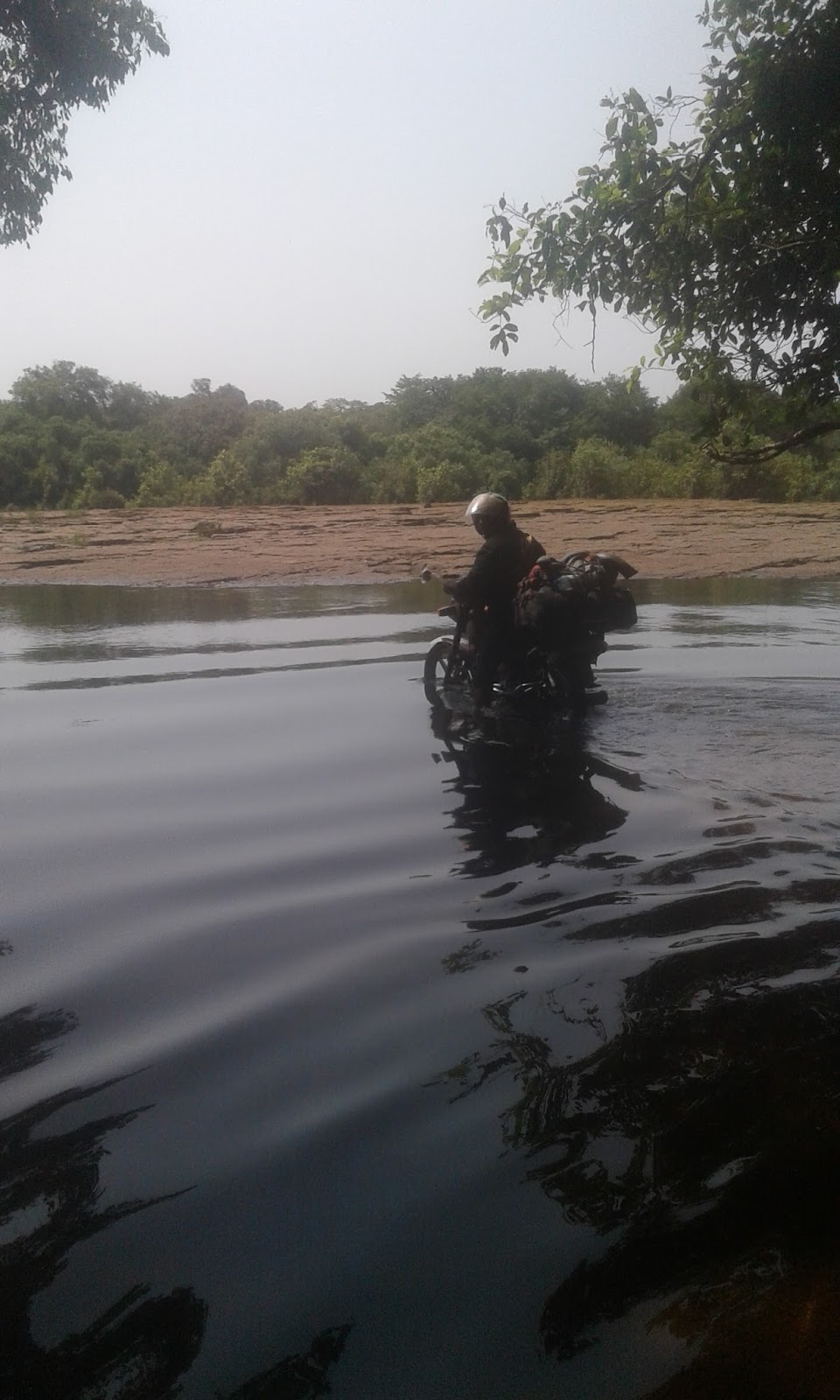
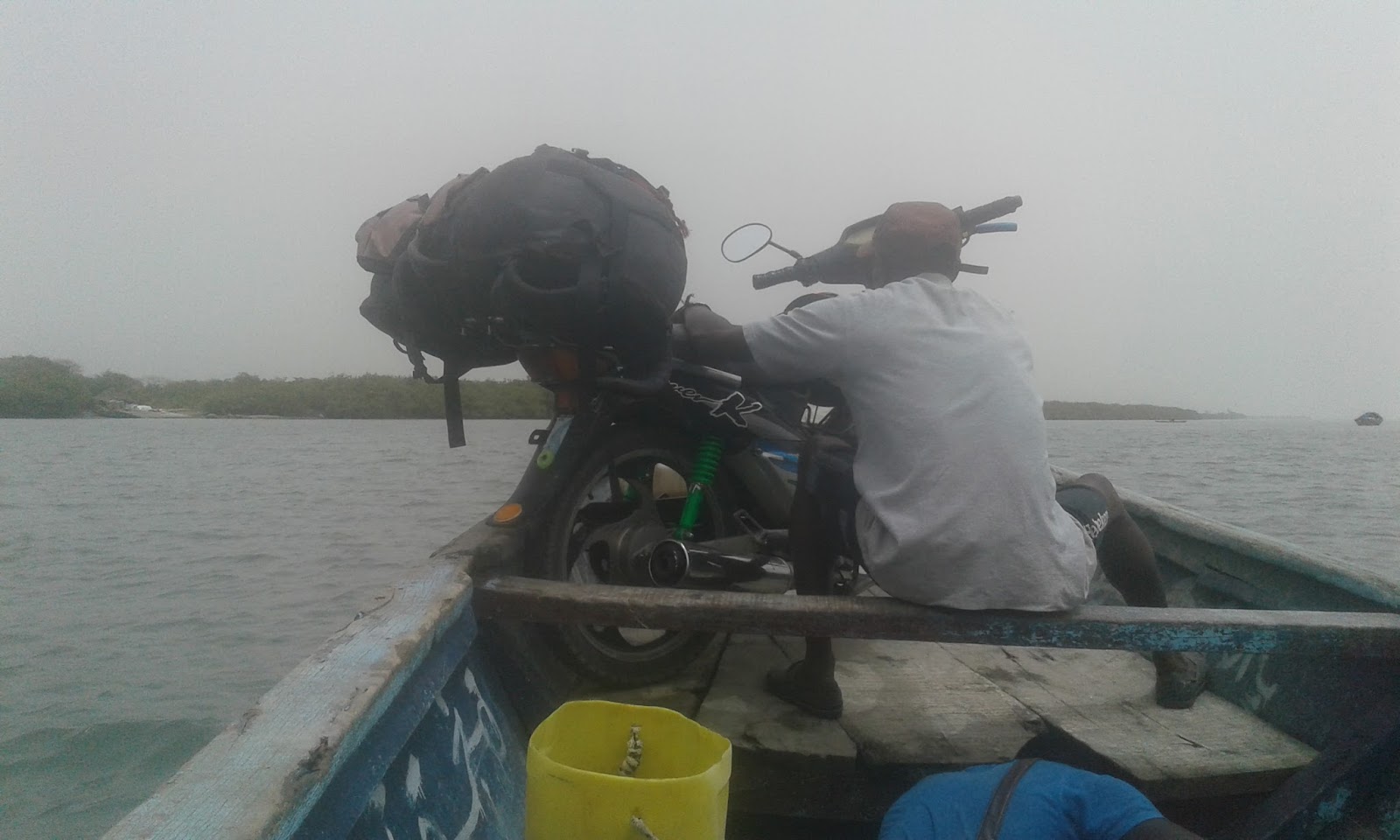
At one point we had to cross a river, and we simply lifted the bike onto a pirogue and kept on driving on the other side. It was somewhere around this point I realised why this border crossing wasn’t mentioned anywhere, at no point was I asked for my passport and I understood I had now entered into Guinea Bissau illegally, had I known it was this simple I may not have bothered with arranging the visa. All jokes aside, I knew I would have to look into resolving this issue at a later stage in the country. We reached the tiny village of Varela, I paid Sili a very reasonable fee, especially considering he now had to drive all the way back to Cap Skirring.

Saturday, March 24, 2018

Up A Lazy River


One morning I finally managed to make it out of Kololi, after spending over a week relaxing by the beach. I had to go back through Banjul and once more get the chaotic ferry to Barra where I could get a seat on a minibus and finally get to Juffureh. This tiny village shot to fame after American author Alex Haley traced his ancestry back to here, and wrote the novel “Roots” which was made into a hugely popular television series. I arrived late in the afternoon when no more tourists were around and found a cheap and basic guesthouse. That day nursery schools from around the area happened to be having their annual sports-day, and I was lucky to catch the last few hours of the adorable event. The following morning I managed to get a cheap pirogue ride out to Kunta Kinteh Island.
Situated in the middle of the Gambia River this used to be called St James Island, and was another sad testament to the European slave trade, with a crumbling fort and some baobab trees all that was left to show for it. I also visited the small museum in town and played a highly competitive game of football with the village children, leaving my bare feet in blisters. After two nights of getting to know the community I decided to keep moving and got up before the crack of dawn to catch a minibus, once more back to Barra where I could get another one to Janjanbureh. With it’s strategic location in the centre of the country on McCarthy island, this town which used to be called George Town, was once planned to be the country’s capital, but the river was too shallow to accommodate the larger ships that started being constructed and the plans were scrapped. Now it’s a very sleepy town without much to see, but I met the captain of one of the river boats, and as he already had a tour group coming the next day, he let me join for a fraction of the price.
There is something oddly romantic about travelling on a river, the peacefulness takes over. No sound except the birds on the shore and the gentle hum of the engine as you glide slowly through the waters, rivers really are one of favourite environments wherever I am in the world. My main reason for joining this whole day excursion was to see Baboon Island, which despite it’s name is famous for being home to another primate, my favourite animal, the chimpanzee. The chimps on the islands have been rescued by The Chimpanzee Rehabilitation Project which started in 1978, and now more than a hundred of the apes live here. No humans are allowed on the islands (including staff) but they do still rely on being fed, so you can usually see them come out to the shoreline. Just as we were cruising by, and we could hear some noises in the bushes, disaster struck. There was only one other boat on the river, but our captain (who may or may not have been smoking a lot of marijuana that day) somehow didn’t see him, we were headed for a full on collision but at the last second the other boat managed to just steer clear, we narrowly avoided their hull but did hit their small boat which was being towed behind. The rope towing it snapped off and the smaller boat started sinking, some of the guys managed to grab hold of the rope and just about keep the boat from sinking completely. Finally they managed to flip it over and empty it, and strangely no damage seemed to have been done to either of the vehicles, although there was a lot of screaming and unhappy people on both sides.
I was sure this commotion would have scared all the animals away, but once we got back on track, a couple of curious chimps had come to see what was going on, which was a great sight. On the way back home, we also saw some hippos as the sun was setting and it was a great ending to a very good day out. The following morning I had planned on travelling south to Senegal, but when I heard Diego, a Belgian guy I met in Palmarin, was in Kololi, I decided to flip a coin and it landed on me travelling the south bank and returning to the beach once more.

Friday, March 16, 2018

Life's A Beach


First of all I’d like to apologise as I’m pretty sure I’ve used this title before and also because it has been a while since my last post, but there really hasn’t been much to write home about.
From Dakar’s main bus terminal I got in a “sept place” which drove me for a couple of hours to Mbour where I could find a taxi to take me to the neighbouring town of Saly. This was a nice relaxed beach-town where I spent a couple of days just doing what you do in a beach-town, in other words not very much. However it largely caters to retired French people and families and although it wasn’t expensive it was pricier than I would prefer. So after a couple of days I kept moving south and after a combination of minibuses and taxis I reached the even tinier town of Palmarin. Here I found a beautiful cheap lodge and spent a few nights in a shared tent, going on a pirogue (motorised wooden canoe) cruise through the mangroves and just wandered the endlessly empty Atlantic beach. After a few days of doing this I decided to keep moving and through a couple of “sept places” I reached the Gambian border in Karang. It was nice to be greeted in English after spending time in Francophone Africa, which has been nice but although I can understand a lot of French, it is nowhere near good enough to have proper conversations with people. After getting my passport stamped I got a minibus to the town of Barra where I could get a ferry across The Gambia River and arrived in the capital city of Banjul. The Gambia is the smallest country by size in mainland Africa and Banjul is the smallest capital with its population of around thirty thousand people. I quickly noticed it may also be the capital with most frequent power cuts and most mosquitoes per capita in any capital I have been, though I can’t verify these “facts.” There really wasn’t much to do or see here so the following day I moved to the beach town of Bakao.
Bakao was a nice quiet place, but the beach was rather ominous, a short rocky stretch of sand with stray dogs and vultures fighting over the garbage, so after two nights I moved to Kololi. Here I found a wonderful guesthouse owned by a Gambian woman named Aisa who used to live in Sweden, I was recommended this place by a friend back home who knows Aisa, and when she heard I was from Sweden, she quickly arranged a room for me at a very good price. The beach here is great, weather has been incredible and beers are cheap, so that is my current situation, not much is really happening as I kind of got stuck here, it has been a great place to just relax and get a bit of a holiday from my holiday, but I know that I will have to keep moving on soon.

Thursday, March 01, 2018

Senegaleasy Does It


Saint-Louis really was a refreshing break after some hectic travel in Mauritania and it felt good to have reached Sub Saharan Africa. Founded by the French in 1659 this was the first French colony in Africa and it still retains much of its old colonial charm. Situated on a narrow strip of land in the middle of the Senegal River, we crossed over the old steel bridge “Pont Faidherbe” designed by Gustav Eiffel and arguably the city’s most iconic landmark, to reach the small old town. We spent some days just breathing in the quiet ambience, cute streets and crumbling French architecture taking us back in time to a foregone era of colonialism. After these chilled out days, we were introduced to a new form of transportation, one I think I will be seeing a lot of in the near future. Known simply as a bush taxi or in Francophone West Africa a “Sept Place” it is an old Peugot station wagon, where the boot has been converted and three more seats have been put in, giving it seven passenger seats. We found out the hard way, that these rear seats are slightly higher up and therefor mean you will have to sit with a slightly tilted head and crooked neck for the entire trip, in this case roughly five hours before we reached the Senegalese capital of Dakar.
The contrast was pretty obvious on arrival, gone was the silence and the chaos met us straight away, but I liked it. We found a cheap hostel in the S.C.A.T. Urbam neighborhood and this was to be my home for some time. I knew I would need to be sorting out some future visas, an annoying fact about West Africa, but I guess I have always been spoilt on past trips with my Swedish passport. I arranged my travel permits for three countries, Guinea Bissau, Guinea and Sierra Leone, something that took up a lot of my time, but when I wasn’t running between embassies, banks and internet cafés I did see a lot of this big city which is built up of a bunch of different neighbourhoods on a peninsula and during my nine days I managed to see most of them.
One day we paid a visit to the nearby and tiny island of Gorée. There are no paved roads or motorised vehicles here and it offers some much appreciated silence. However the tranquility comes with a somber history as this was once one of the epicentres of the European slave trade. Ruled by the Portuguese, The Dutch, The English and finally the French, it was sad to think how many lives had been sold from these old houses and dungeons before taking the traitorous trip across the Atlantic Ocean.
Another interesting sight to see was the recently erected Monument Of African Renaissance. This giant bronze statue (the tallest in Africa at 49 metres) has come with a lot of controversy though, it was built by a North Korean company who have specialised in supplying African countries with communist like monuments, the financing of it has come under scrutiny. Also the statue depicts a man, woman and child and much debate has come about the appropriateness of the woman’s clothing seeing as Senegal is a more than 95% Islamic country. After my time in the metropolis, which saw saying farewell to Tre and also included my first real nights out drinking of this trip (and more shockingly a couple of accompanying, terrible hangovers) I decided to keep heading south for some beach life.

Wednesday, February 21, 2018

4x4itania


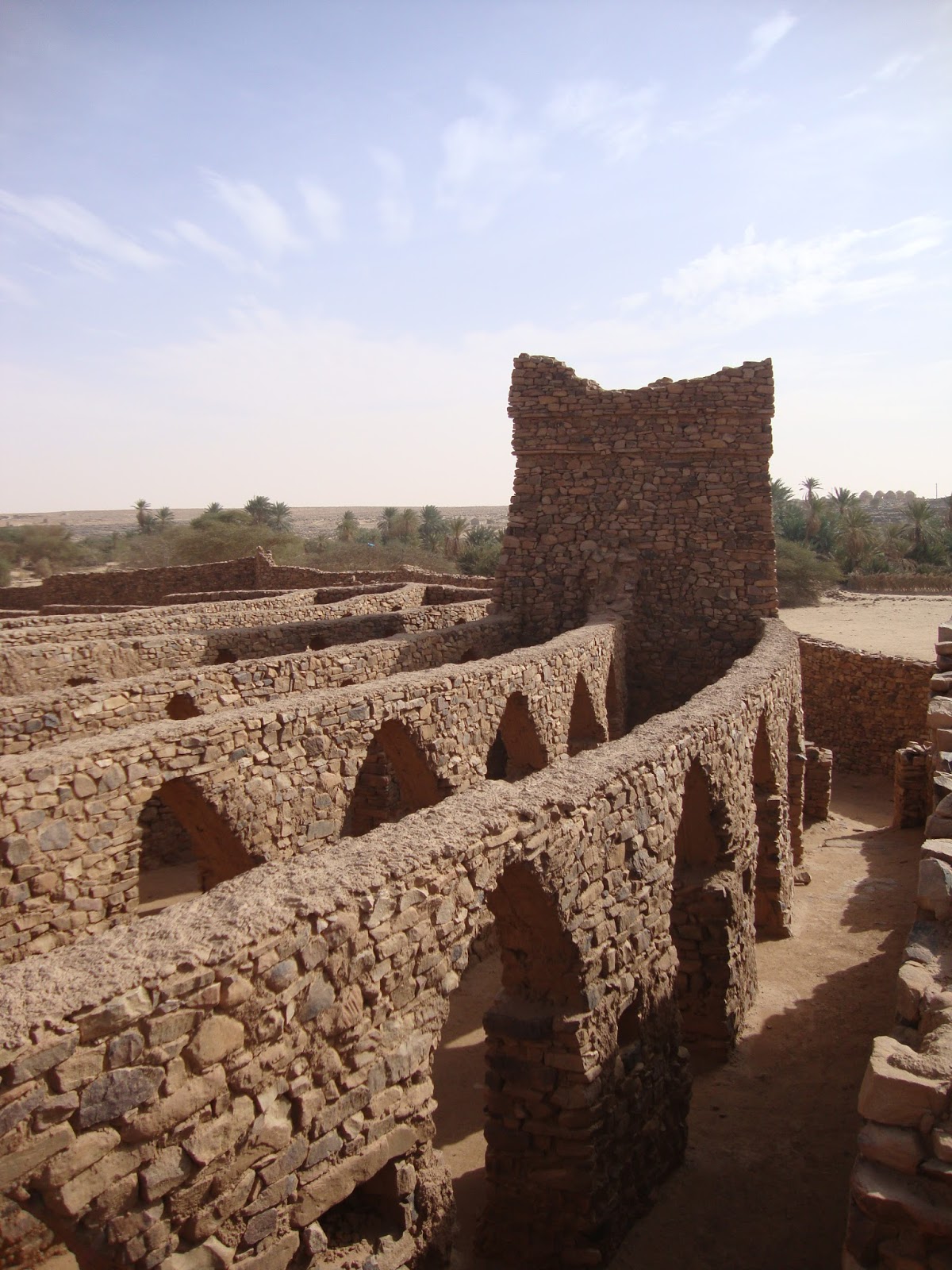
After a couple hours sleep we got up to explore the town of Atar, it isn’t much more than a few sandy roads, a roundabout, a mosque and some small shops and restaurants so after this day we decided to keep moving. Bab Sahara, the auberge we stayed at, is owned by a Dutch man named Joost, who has been running his business for 20 years now. His friend Leonie was also visiting from Holland so we arranged to have a 4x4 pick up us up in the morning and between the three of us we got a very reasonable price for a two day excursion. We started off crossing the high plateaus, passing by some cave paintings believed to be 5000 years old before arriving in the ancient town of Ouadane. This was once an important caravan town in the middle of the Sahara but has now declined to a tiny settlement that makes Atar look like a metropolis. Still it was very interesting to walk around the ruins of the old town and imagine what it would have been like in its heydays. The next morning Lamine our driver took us out of the city and we abandoned the traditional roads for the desert dunes. It was a beautiful drive, and I couldn’t believe how Lamine was navigating us through the sand without a GPS or to my untrained eye any discernable landmarks. The landscape was surprisingly diverse as the giant rolling dunes turned into flat rocky and bushy terrain, the occasional oasis and at one point an entire field of seashells, proving this was all once part of the ocean, an inconceivable thought today.
Just as I was complementing Lamine’s navigational skills, it turned out we were actually lost, he kept scouring the horizon for any kind of sign but the dunes had changed and he couldn’t recognize where we were any more in the vast emptiness. We drove around for a while before a young nomadic boy appeared out of nowhere with his herd of goats, he pointed us in the right direction and we were back on track to Chinguetti. Like Ouadane, Chinguetti was once an important town for travelers and traders but similarly it has also fallen out of favour over time and now a ghost town lies here while the sand dunes are starting to encroach and take over.
We visited the ancient library and its charming caretaker Saif who was happy to show us some of the antique and impressive Islamic works, as this used to be a much needed stopping point for making the pilgrimage to Mecca. After this we drove back to Atar where we once more spent the night at Bab Sahara before catching a minibus the following morning to the country’s capital Nouakchott. Almost one third of the Mauritanian population live in this fairly new city which was no more than a village when it was chosen to be the capital 60 years ago. Designed to accommodate 15 000 people it is now home to over a million. There didn’t seem to be all that much to do or see here so after walking around the dirty, dusty streets and markets for a day we decided to head towards the Senegalese border.
We got a taxi to the “bus station” but there were no buses around, only personal cars, so we negotiated with a driver and waited for his old battered Mercedes to fill up. When we left, the back seat had four grownups and a child whilst Tre and I shared the cramped front seat for the leisurely 3 ½ hour drive to the border town of Rosso. Here we got relentlessly hassled by all kinds of people trying to trick us out of money, before finally getting our passports stamped and got on the free ferry across the Senegal River. On the Senegalese side there was more hassling but we got stamped in without any problems and walked for a few kilometres to find a bus station with an actual bus. We had to wait for this to fill up as well, but after about three hours of waiting patiently we set off and drove for a few more hours to finally get to the city of Saint Louis.

Saturday, February 17, 2018

MauriTrainia


Tre and I got up early to meet our grumpy taxi driver Cher and set off for the border. We crossed over the Moroccan side and then had our lives in Cher’s hands as we passed through the road-less few kilometres of no-man’s-land, where you really have to know which dunes to cross and tracks to follow, as you can easily get stuck in the sand and the area still has landmines spread around. It was like driving through a cemetery of abandoned cars which have just been left there to disintegrate. We made it over to the Mauritanian side where they now issued visas at the border, meaning I wouldn’t have needed to arrange that in Rabat, but there is just so little information on this to be found, and when found it is very contradicting. Once we arrived at the outskirts of the small town of Nouâdhibou, Cher was grumpier than ever and decided to drop us off. This was an issue as we had none of the local currency Ouguiya, but we found a taxi driver who was willing to drive us in to the centre where we could exchange some Moroccan Dirham pay him and find a place to stay.
When I first started mentioning this trip to friends back home, the first place I knew I’d be visiting after Morocco was Mauritania (or I guess Western Sahara as well if you consider that a country) a place that most people would look at me sheepishly asking “Is that a country?” Well I can tell you all now that yes it is. It is actually a pretty big country, the 28th largest in the world by area but also one of the least densely populated countries in the world as the Sahara takes up 75% of the country’s surface. A more concerning fact about the country is that it was one of the last in the world to abolish slavery, and although it is now illegal, somewhere between 4 and 20 percent of the 3.4 million population are slaves to this day. We spent one day walking around the sleepy coastal town, seeing the ship graveyard, eating a kilo of barbecued goat meat and buying two necessary items for our upcoming trip, sunglasses and a headscarf.
We had both heard and read about this famous iron ore train, one of the longest trains in the world stretching a staggering 2.5 kilometres from the locomotive to the last car. It isn’t a passenger train per say, but you can just climb aboard and get a free ride if you like. It doesn’t really have a fixed schedule, so we sat by the train tracks waiting for three hours in the blistering sun, but once it arrived there was no missing it. It stop’s only for a few minutes so we quickly climbed into one of the last carts and made ourselves as comfortable as possible. As we were travelling from the coast towards the mine it doesn’t have any cargo, but if you do the trip in the reverse direction you would have to sit on top of the mounds of loaded iron ore. It was all very exciting, sitting in this empty bucket, under the sun watching the desert chug by, but we were very glad we had our sunglasses and headscarves to somewhat protect us from all the sand and ore particles whipping your face.
Once the sun had set, you could squint and see the amazing starry sky, however it was freezing cold and although we wrapped up in as many layers as we could there was no way I could sleep. And maybe that was lucky, because after about nine hours of rocking around, the train came to a screeching halt, it was pitch black but I could see some figures running and shouting by the tracks. It seemed we had arrived in Choum the place we wanted to get off, knowing the train wouldn’t stay still for long, we threw our bags down and jumped off the cart. Here young men were pulling at us from every direction as we held onto our bags with iron grips. For a while it was slightly unnerving and scary, we were groggy from the long trip and covered in dust from head to toe. In all the confusing chaos of people pushing and yelling in a mixture of different languages we got dragged into a van, which we found out was heading for the nearest town Atar. This was luckily where we wanted to go, and a few hours later we arrived, it was still dark outside but we managed to find an “auberge” where we could wash the worst of the dust off our faces and finally crash in a much needed bed!

Tuesday, February 13, 2018

Summaroc


After Casablanca I decided to follow the coast down and after 8 hours on a bus I arrived in the small town of Essaouira. Here I found a very quaint fishing port with a mandatory old medina. It is also famous for it’s surfing and kitesurfing, but the weather didn’t permit for any beach-life during my four day visit. Instead I spent my days hanging out, drinking tea, playing cards at the relaxed hostel and wandering within the town walls and harbour when it wasn’t raining. Snacking in Morocco has been excellent throughout, and Essaouira was no different, with an array of different sandwiches always on offer, fresh oysters and the incredible and cheap pastry that I have been spoilt with since entering this country.
Before leaving Sweden I had applied for a new credit card without international fees, this card didn’t arrive until after I had left, but luckily two neighbours Iréne and Peter, from back home were going on a short trip to Marrakech and they were kind enough to bring it with them. So I got a bus back to the big city, met them in the morning for a cup of coffee and could finally get my card. The weather in these parts of Morocco was pretty dismal, so I decided to cover some ground and got on a 25 hour bus south to the city Dakhla. The long journey took me through some pretty boring landscape, to my left was endless flat, dry and rocky terrain and to my right much of the same except when the road was close enough to the coast to catch some views of the Atlantic Ocean.
It also took me through the complicated and disputed territory of Western Sahara, seen by many as an independent nation, Morocco continues to occupy the land which they have been doing since the 1970’s. I didn’t notice much of a difference, and crossed the “border” at night without even noticing, there were a couple of police checkpoints where I was the only person on the bus to be checked, some confusion arose as when asked for my profession I responded “Waiter” which was misinterpreted as “Writer” and apparently they don’t take kindly to journalists in this area, but the confusion was cleared up and I now know to use the French word “Serveur” instead. We finally arrived in Dakhla before sunset without any real complications. I had intended on staying a couple days in this Western Saharan port town, but on arrival realised there really wasn’t much to do or see. There was an uninspiring centre-ville, more kitesurfing and the Dakhla Golf Club which seemed to be one giant bunker, none of this tickled my fancy so the following morning an American guy called Tre, who was staying at the same crappy hotel, and I decided to get into a shared taxi and leave the Kingdom of Morocco heading for the Islamic Republic of Mauritania.

Wednesday, February 07, 2018

A Tale Of Two Cities


Capital Punishment
Ok, so that might be a bit harsh of a title, but it was the first pun that came to mind. I got the train from Tangier and arrived in Morocco’s capital Rabat just as it was getting dark. Stepping out of the train station I noticed it really was a modern city, with clean, wide, palm lined avenues and fancy buildings. One of the reasons I knew I would have to visit Rabat was to arrange my visa for future travel, so the next morning I got up bright and early and caught a taxi to the Mauritanian embassy. I had heard some nightmare stories of how difficult it could be, which was why I wanted to arrive early in the week and give myself as much time as possible. When I got there a half Moroccan half Mauritanian man named Zeine greeted me outside the gates, he told me I needed two passport sized photos and a copy of my passport. Zeine didn’t work for the embassy, but has made a profession of helping bewildered tourists and I appreciated his entrepreneurship so gladly accepted his help. He took me to sort out all the requirements, and while I went into a local bank to complete the 690 dirham (roughly €70) visa payment, he even filled out my application form which was all in Arabic and French. He never asked for asked for any money, but I was more than happy to give him a 50 dirham tip, hoping this would suffice for his assistance, and he seemed pleased with it. The following day I went back to the embassy and after an hour or so of waiting I could pick up my completed visa, it really wasn’t as complicated as I had feared. When I wasn’t handling bureaucratic issues I was walking around the city, and although it was nice, there was just something lacking, it didn’t have that charm or character that I had gotten used to in the past couple of weeks, the medina wasn’t as chaotic, the alleys were wide enough to fit two cars and after a few days I decided to keep moving.
Of All the Gin Joints…
It was only an hour’s train ride south to Casablanca, the city made famous by the 1942 movie (which I have never seen) is by far the largest in the country with a population of nearly four million and the economic capital. Walking from the station to my hostel I immediately found what I was missing in Rabat, even though its a big modern city as well, the neighborhood where I stayed behind the Casa Port was oozing with personality and gave me flashbacks of Latin America with its small plazas and yellow Spanish Colonial architecture. I spent three days falling in love with the big city, the different neighbourhoods the mixture of modern buildings, French boulevards, the old medina, souqs and giant mosques along with the nice weather made for perfect long walks. Unfortunately most of the oceanfront is currently under renovation, but once the beach promenade is finished in a couple of years, Casablanca will have even more of a reason to visit.

Friday, February 02, 2018

Feztive Towns


The nine hour drive took me through ever-changing scenery, starting in the rolling reddish dunes of the Sahara, then past rocky, arid landscapes with the occasional palm filled oasis and adjoining small settlements, over the Middle Atlas Mountains, through the snowy alp like city of Ifrane with a pine forest that looked more at home in Sweden than Morocco if it hadn’t have been for the troops of monkeys playing in it, before finally arriving in Fez. The medina in Fez was if possible even more of a maze than the one in Marrakech, and really is the stereotypical, chaotic hustle and bustle with all the sounds, colours and smells that I had expected.
It is the largest medina in the world and I spent a few days wandering around the twisting lanes, constantly getting lost and climbing to rooftop terraces offering great views of the city and its iconic leather tanneries.Here they still practice the same methods, with all natural dyes and softeners, which they have been using for over a thousand years to prepare their leather hides. I really enjoyed Fez, but it does get intense and you are rarely left alone, with people trying to sell you stuff or scam into giving them money, so after these hectic days I needed a respite, I got on a bus to the small town of Chefchaouen, and I really couldn’t have picked a better spot to relax.
The town has to be up there with the most picturesque I have ever seen, perched in a valley surrounded by jagged mountain peaks, almost all the buildings are painted in different shades of pastel blue, creating an almost ridiculously postcard perfect community with a peaceful ambience. I stayed three days, catching my breath, chilling at the hostel and walking around the blue Andalusian houses and cobblestoned alleys, before deciding to catch another bus heading north once more.
This bus took me to Tangier which on first impression wasn't great, gone were the quiet days of Chefchaouen and I was back in the cauldron getting hassled again. On a clear day you can see the European continent from here but the following morning was anything but that, it was really cold, windy and cloudy, so after strolling around for a couple of hours I decided to cut my losses, leave Tangier and finally start heading south!